Elastic Data Onboarding

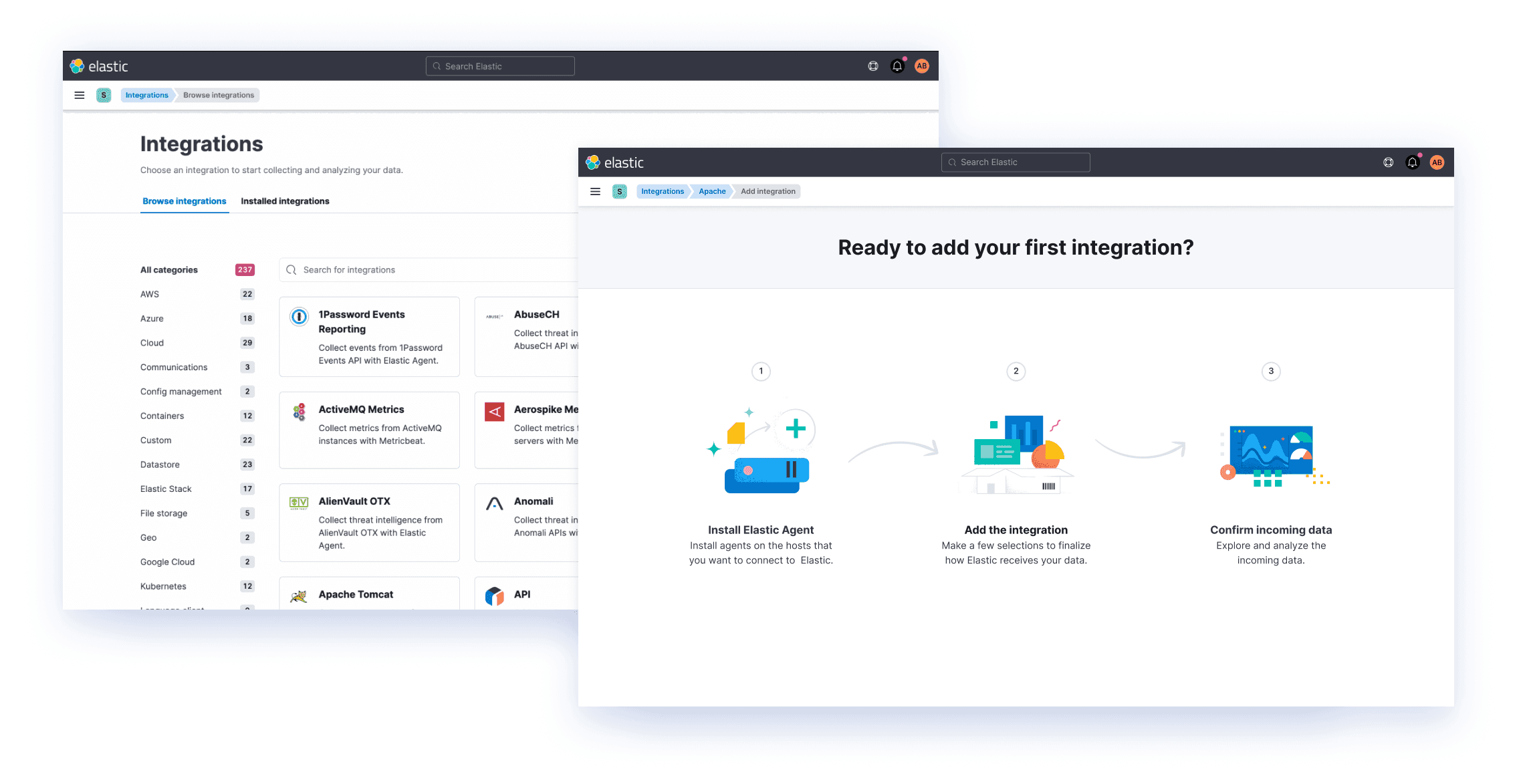
Help people get started with Elastic by improving the data integration onboarding experience.

Elastic Data Onboarding

Help people get started with Elastic by improving the data integration onboarding experience.

Company

Elastic

Role

Principal Product Designer

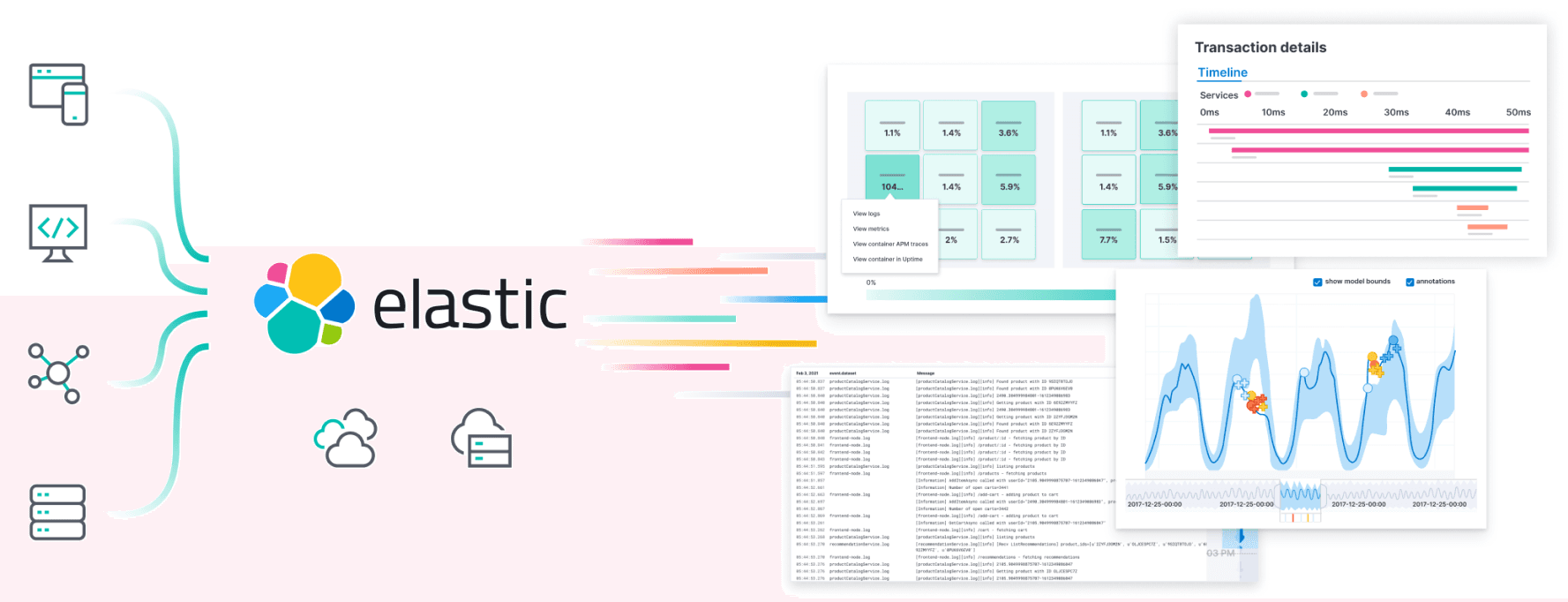
Elastic provides infrastructure software that powers a large portion of the web. However, it can be complex for users to get started with. In order to realize any value from the product, users need to integrate their live data so they can query and analyze it.


Problem

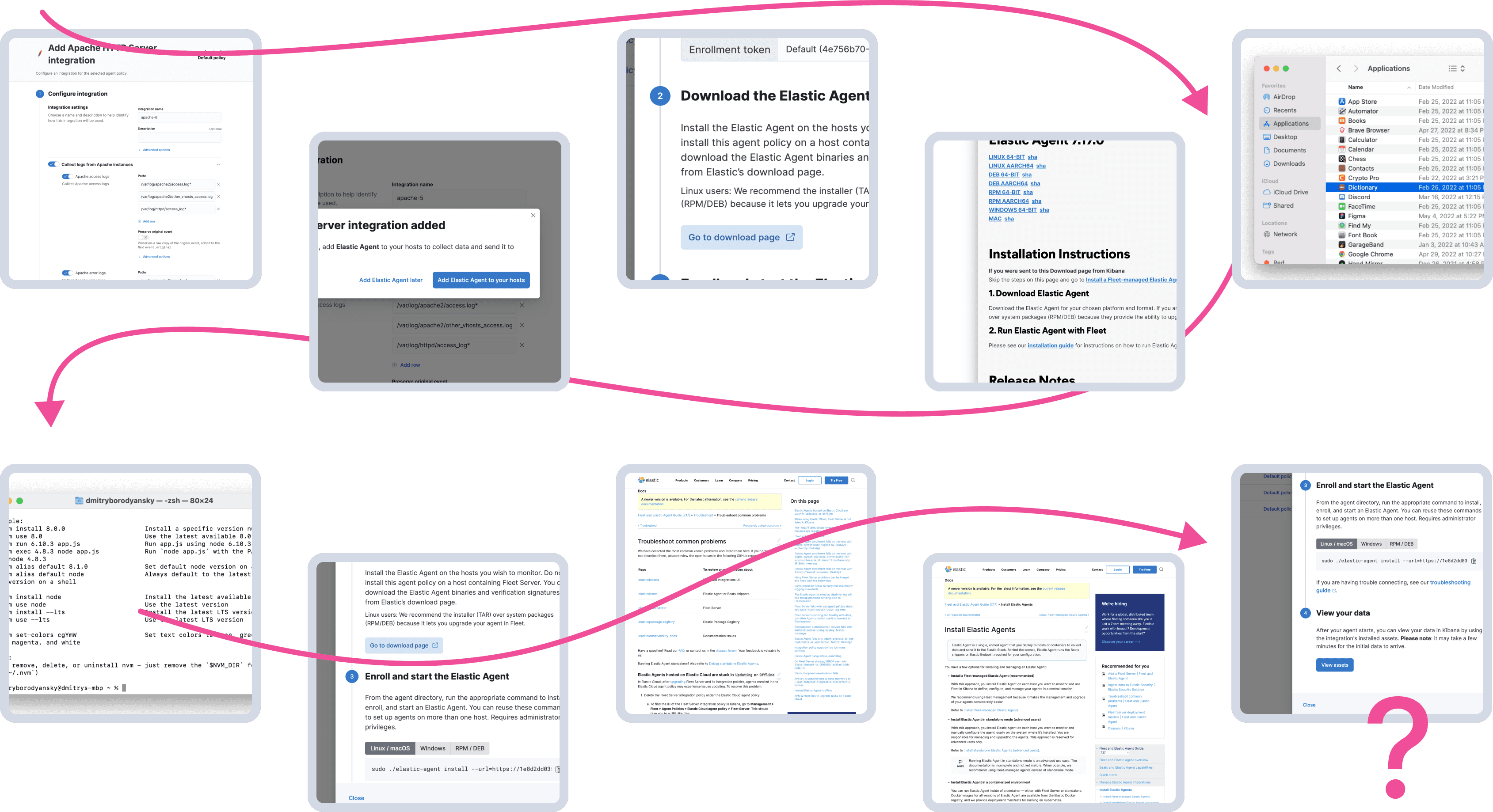
The data onboarding experience was found to be a major pain point for users. There were a lot of tasks involved, took a lot of time and effort, and had much room for error. These challenges resulted in many users getting lost along the way.


Hypothesis

A guided experience would work better than a bunch of sprawled tasks. Simplifying and automating the process would improve the first impressions and make it easier for users to get started. By doing this, we could improve the key indicator of data ingestion.

To understand the technical complexity and overall experience, I framed an experience map to validate my assumptions with subject matter experts. I researched what users were doing, where they were doing it, and what they were thinking. Alongside, exploring various low-fidelity flows to inform technical dependencies, order of operations, and interaction patterns.


Design Decisions

  • A modular guided experience would give users a sense of awareness, progress, and completion while adapting to the variance and modularity of dependencies.

  • To prime the experience, we would ease people in and boost their confidence by setting expectations and easing intimidation up front.

  • To challenge the existing complexity of the setup process, I collaborated with engineers to reduce the number of manual steps to one command line, eliminating a lot of friction and streamlining the experience.

  • Clarity and confirmation through deliberate motion in the UI would guide and reassure users.


Validation

For assumption testing, I put the prototypes in front of users to learn what was working and not. I iterated on the prototype and tested different variations until reaching confidence in the solution.

We shipped and measured. After 30 days of usage analytics, the results looked favorable with a 30-40% increase in data ingestion rate. As tuning and measurement continued, the observed increase in data ingestion rate of 11% was indicating a meaningful impact for the business.

Overall, the redesign of the data onboarding experience helped to simplify and automate the process, resulting in a better user experience and increased business value.

Company

Elastic

Role

Principal Product Designer

Elastic provides infrastructure software that powers a large portion of the web. However, it can be complex for users to get started with. In order to realize any value from the product, users need to integrate their live data so they can query and analyze it.


Problem

The data onboarding experience was found to be a major pain point for users. There were a lot of tasks involved, took a lot of time and effort, and had much room for error. These challenges resulted in many users getting lost along the way.


Hypothesis

A guided experience would work better than a bunch of sprawled tasks. Simplifying and automating the process would improve the first impressions and make it easier for users to get started. By doing this, we could improve the key indicator of data ingestion.

To understand the technical complexity and overall experience, I framed an experience map to validate my assumptions with subject matter experts. I researched what users were doing, where they were doing it, and what they were thinking. Alongside, exploring various low-fidelity flows to inform technical dependencies, order of operations, and interaction patterns.


Design Decisions

  • A modular guided experience would give users a sense of awareness, progress, and completion while adapting to the variance and modularity of dependencies.

  • To prime the experience, we would ease people in and boost their confidence by setting expectations and easing intimidation up front.

  • To challenge the existing complexity of the setup process, I collaborated with engineers to reduce the number of manual steps to one command line, eliminating a lot of friction and streamlining the experience.

  • Clarity and confirmation through deliberate motion in the UI would guide and reassure users.


Validation

For assumption testing, I put the prototypes in front of users to learn what was working and not. I iterated on the prototype and tested different variations until reaching confidence in the solution.

We shipped and measured. After 30 days of usage analytics, the results looked favorable with a 30-40% increase in data ingestion rate. As tuning and measurement continued, the observed increase in data ingestion rate of 11% was indicating a meaningful impact for the business.

Overall, the redesign of the data onboarding experience helped to simplify and automate the process, resulting in a better user experience and increased business value.